
Why Americans Fall in Love with Provence for Their Wedding
filed in Destination Wedding Advice - 30 March 2026


SUMMARY
- What American Couples Getting Married in Provence Recognise Without Being Able to Name It
- The Culture & Lifestyle Connection
- The Food, the Wine, and What They Say About a Place
- The 3-Day Celebration — a Format That Finally Makes Sense
- What Planning a Provence Wedding From the US Actually Looks Like
- Frequently Asked Questions
I’ve been working with American couples getting married in Provence since 2018. Provence has been my home since 2015 — and over the years, I’ve had the same conversation dozens of times. A couple reaches out — usually from New York, Boston, or the West Coast. Somewhere in that first exchange, they say some version of: “We can’t fully explain it, but Provence just feels right.”
Over the years, I’ve come to believe them. There is something about Provence that resonates specifically with Americans — not despite the distance, but often because of it. Indeed, it isn’t about wanting something foreign. Essentially, it’s about recognising something deeply familiar in a place that is entirely new.
In fact, let me try to put into words what my couples so often feel but struggle to articulate.
What American Couples Getting Married in Provence Recognise Without Being Able to Name It
Above all, Provence has a particular quality of life that Americans respond to immediately. The pace is slower, the meals are longer, the evenings stretch on without apology. There is a culture of gathering here — of sitting around a table well past midnight. Simply put, dinner is an event in itself, not a stepping stone to something else.
For many American couples, this is precisely what they want their wedding weekend to feel like. Not a sprint from ceremony to reception to send-off, but something that breathes. Moreover, Provence offers that atmosphere not as a performance, but as a way of life. In contrast, the region doesn’t put on a show for visitors — it simply is what it is. Importantly, that authenticity is something couples feel from the very first site visit.
A Region With a Strong Sense of Identity
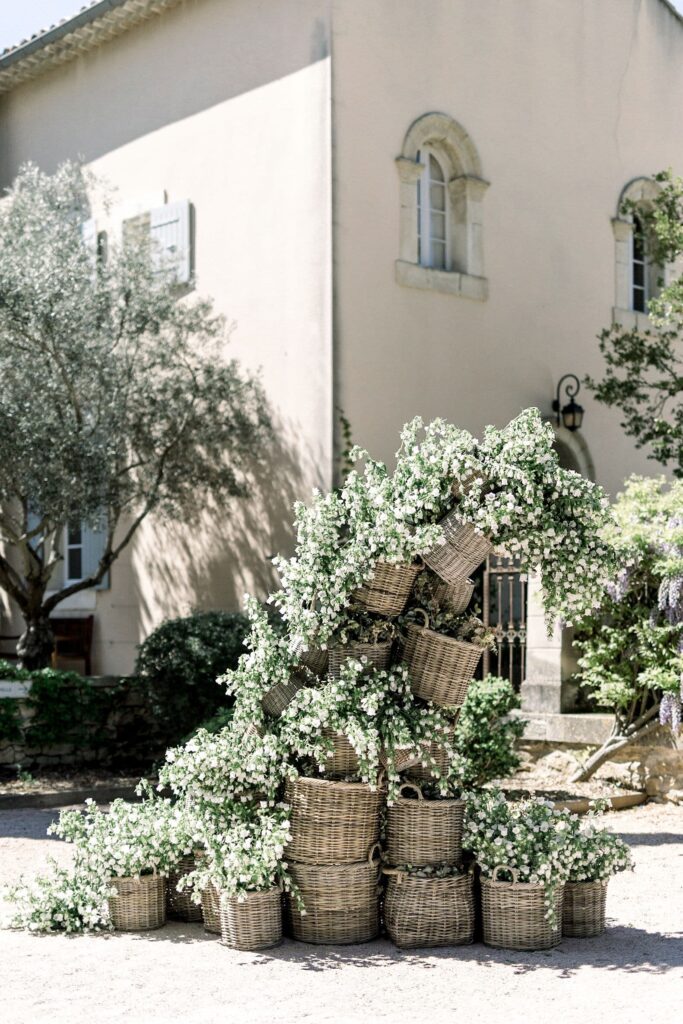
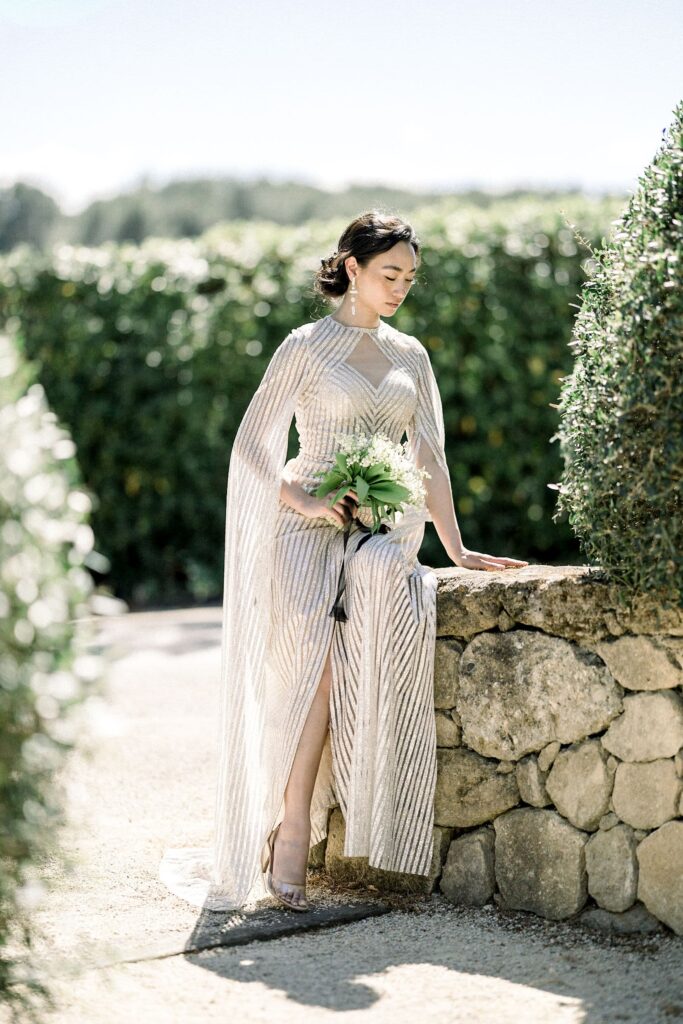
Indeed, Provence has its own language, its own cuisine, its own architecture, its own rhythm. Specifically, from the ochre villages of the Luberon to the fragrant garrigue of the hinterland — and across to the coastline of the French Riviera — every part of the region has a distinct visual and sensory signature. Naturally, for a couple planning a destination wedding, that distinctiveness matters enormously. In other words, guests arrive somewhere that feels genuinely somewhere — a place with a soul, not a generic beautiful backdrop.In my experience, American couples are particularly attuned to this. They travel well. They know the difference between a place that looks good in photographs and a place that actually feels extraordinary. Notably, Provence consistently delivers on both counts.
The Culture & Lifestyle Connection
Naturally, there is a reason Peter Mayle’s books about Provence found their most devoted readership in the United States. The values Provence embodies — conviviality, craftsmanship, time spent well with people you love — resonate with how many Americans aspire to live. Overall, a wedding in Provence becomes an opportunity to step into that life, however briefly, and to share it with the people who matter most.
Furthermore, American couples often tell me that Provence feels surprisingly accessible. Not just geographically — Nice airport is under 10 hours from most East Coast cities. But culturally too. Additionally, the warmth of Provence, its informality, its genuine welcome, sits comfortably with an American sensibility. Particularly, it is elegant without being cold. It’s a place where you can feel genuinely comfortable while being somewhere extraordinary.
The Sense of Occasion That Comes Naturally
Honestly, part of what I find remarkable, after years of working here, is that Provence creates a sense of occasion without requiring you to manufacture it. The golden evening light, the scent of lavender and pine, the sound of cicadas — all of this arrives before you’ve placed a single flower. Consequently, every creative decision you make builds on a foundation that is already extraordinary. For couples investing in a full-service wedding at this level, that foundation is enormously valuable. Indeed, it means the budget works harder, because the setting does so much of the heavy lifting from the start.
The Food, the Wine, and What They Say About a Place
American couples are often surprised by how central food and wine become to their Provence wedding. They plan for it initially as one element among many. Then, after a catering tasting in a Provençal kitchen in spring, it becomes something closer to a guiding principle.
Provençal gastronomy is not about performance. It’s not about theatrical service or elaborate presentations. Instead, it’s about the tomatoes that arrived from the market that morning. The olive oil pressed 10 kilometres away. The rosé from the vineyard visible from the terrace. It’s food that tastes of a specific place at a specific time of year. In short, it communicates something to guests that no imported ingredient ever could.
A Wine Culture That Invites Participation
Furthermore, Provence is the world’s leading rosé producing region. Many American couples grew up drinking Provençal rosé without knowing where it came from. There is something quietly moving about serving it at their wedding, in the very region where it was made. It turns a detail on a menu into a moment of genuine connection — between the couple, their guests, and the place they chose to celebrate in.
Specifically, I always encourage my couples to build a wine experience into the weekend. A private tasting at a nearby domaine, a curated cellar selection for dinner, a local bottle in each guest room. These gestures cost relatively little. However, they anchor the celebration in the region in a way that lingers long after the weekend is over.
The 3-Day Celebration — a Format That Finally Makes Sense
One of the things I find most interesting about working with American couples is how naturally they embrace the multi-day format. In the United States, a wedding is typically a single evening. Ceremony, cocktail hour, reception, done. In Provence, the wedding weekend is a fundamentally different proposition. Moreover, American couples tend to grasp the logic of it immediately.
The reasoning is simple. Your guests have crossed an ocean. They’ve taken time off work, arranged childcare, and spent real money on flights. Therefore, a single evening — however beautiful — doesn’t do justice to that investment. A three-day celebration does.
How the Three Days Typically Unfold
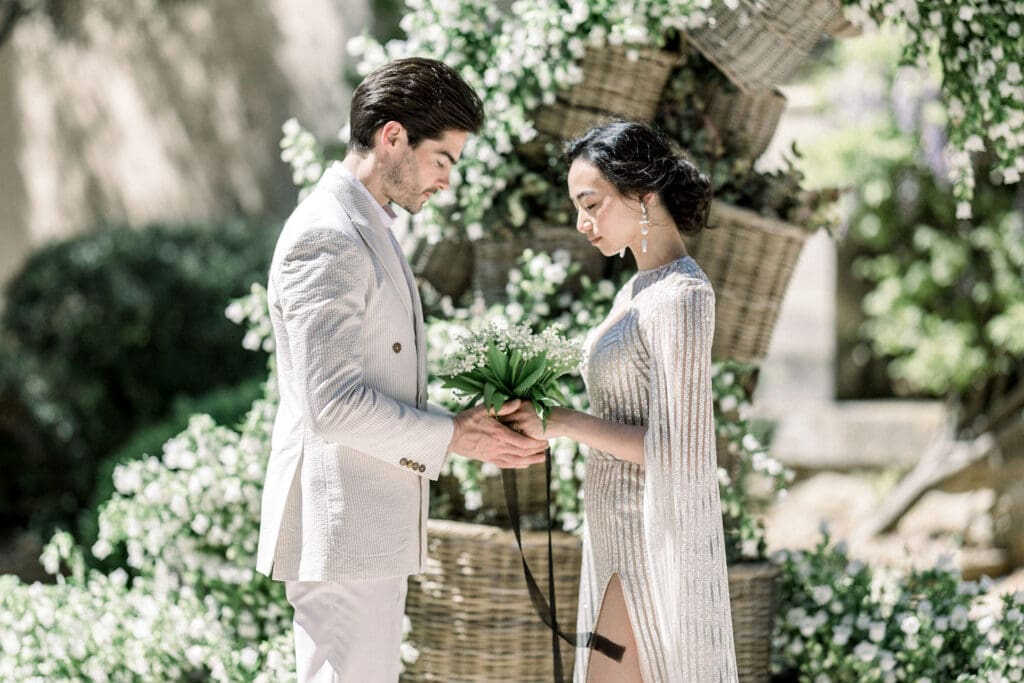
The format I design for my couples follows a natural rhythm. The first day brings guests together gradually — a welcome apéritif, an informal dinner, time to settle into the region. The second day is the wedding itself, a full celebration from late afternoon into the early hours. The third day closes the weekend gently — a long brunch, perhaps a beach club afternoon on the Côte d’Azur.Indeed, the result feels less like an event and more like a genuine shared experience. If you’re curious about how I approach this in detail, the 3-day signature celebration page explains the framework fully. Furthermore, my La Bastide du Roy venue guide shows exactly how a specific property supports this kind of journey.
What Planning a Provence Wedding From the US Actually Looks Like for American Couples
The most common concern I hear from American couples early on is logistics. Can we really plan a wedding in France from across the Atlantic? The honest answer: yes. In fact, many of my couples find it more manageable than they expected.
Specifically, the key is having a planner on the ground who speaks your language — both literally and culturally. Someone who understands the American approach to communication and timelines, while also being fluent in the vendor relationships and seasonal rhythms of the region. That combination is not common, but it makes an enormous difference.
Moreover, most of my American couples make one or two trips to Provence during the planning period. A site visit first, then a final logistics trip. Everything in between happens remotely: video calls, shared planning portals, digital mood boards. Consequently, the distance rarely feels like an obstacle once the right working relationship is in place.If you’d like to understand what that relationship looks like in practice, the full-service planning page is the clearest starting point. Alternatively, if you’re ready to start a conversation, I’d love to hear about your plans.
Frequently Asked Questions
Do American couples need to speak French to get married in Provence?
Not at all. Most of the planning process happens in English when you work with an English-speaking planner. Vendor communications, contracts, and logistics are all handled on your behalf. However, a few words of French go a long way with locals and are always warmly received.
How far in advance should American couples book a Provence wedding?
18 to 24 months ahead is the right timeframe for the venues and dates that work best. The most sought-after properties in the Luberon and on the French Riviera fill up fast. Therefore, the earlier you move, the more options remain available.
Is Provence or the French Riviera better for an American couple?
Both regions offer extraordinary settings — the choice comes down to the feeling you want to create. Provence tends toward the warm, timeless, and deeply rural. The French Riviera adds coastal glamour, sea views, and Mediterranean energy. Many couples choose a venue that gives them both — a property in the hills above Antibes, for instance, where you have Provençal atmosphere and the Riviera at your doorstep.
What is a realistic budget for an American couple’s Provence wedding?
For a fully planned, multi-day destination wedding in Provence, budgets typically start at €150,000 for 80 to 100 guests with a high-quality vendor team. The three-day format and production elements add to that figure. That said, the most useful first step is always a direct conversation about your specific priorities.
What makes Wed’Love different for American couples?
I’m Belgian-born and have lived in Provence since 2015. Specifically, I’ve built my agency around working with American couples. I understand the cultural references, the communication style, and the expectations around transparency. I also speak the language of the region fluently, in every sense — the vendors, the venues, the seasons. That combination is what Wed’Love is built around.
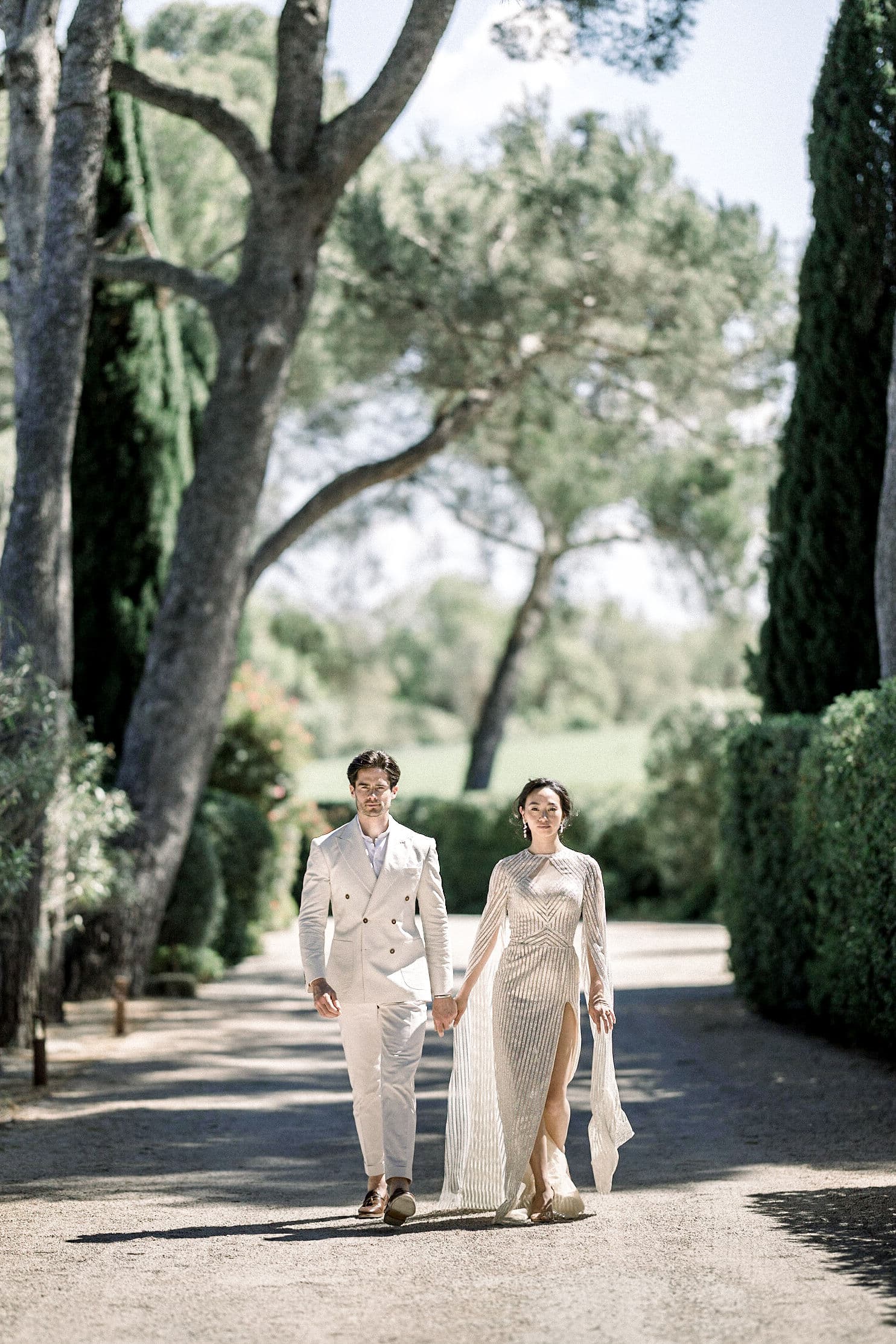
© Crédits : Tom Sienna featured in Albe Editions press
Download these free resources
The ultimate wedding planning checklist
Your step-by-step guide to staying on track and stress-free!
get the checklist!
Your 18-12 Month Wedding Timeline
A clear, structured timeline covering 18 to 12 months before your wedding
get the timeline!




The Ultimate Wedding Planning Checklist

Your 18-12 Month Wedding Timeline
